Water Damage vs Flood Damage: What Homeowners Should Know
Water intrusion can transform a comfortable house into a stressful one within a few hours. It could be a leaky tap behind your walls that drips slowly, or a burst of water entering the house after a downpour, but the effects can be immense. Nevertheless, not every problem that concerns water is the same. Learning about the distinction between water damage vs flood damage is crucial to enable homeowners to react promptly and save their properties, and prevent future complications.
The terms are used interchangeably by many people, although they are distinct in source, severity, and level of restoration. Being aware of these differences will guide you in doing the right thing, whether that means scheduling water damage repair services or inviting professionals for flood cleanup services.
Understanding Water Damage and Its Causes
The water source damage is normally domestic in your house. This can be caused by leaking pipes, broken appliances, broken roofs, or even obstructed drains. These issues may not sound important on the one hand, but on the other hand, they can develop into serious issues quite quickly if not treated.
The fact that water damage is not always noticeable is one of the greatest problems. Water can creep into walls, ceilings, and floors, weakening the structure over time. In the absence of adequate water damage repair, it can lead to mold growth, rot, and electrical damage.
For homeowners, early detection is important. Even minor details, such as walls turning discolored or a musty smell, can be symptoms of a bigger problem within the wall. The solutions to such issues will not only eliminate further harm but also minimize the overall repair costs.
What Makes Flood Damage More Severe
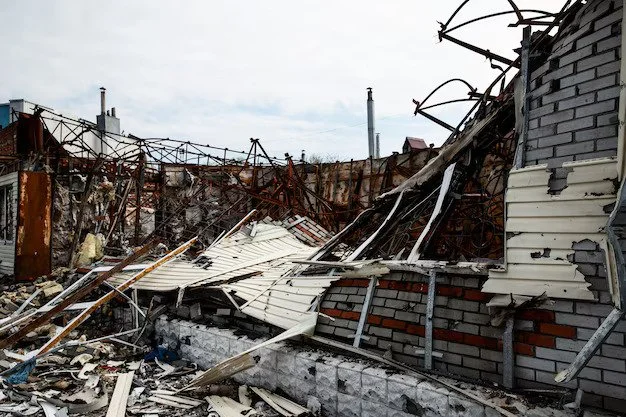
Flood damage, unlike water damage, is external. Water can quickly enter your home due to heavy rain, storms, drainage system overflows, or rising water levels. This type of home flood damage is usually more widespread and destructive.
The danger of flood damage stems from the nature of the water. Floodwaters usually contain pollutants such as bacteria, chemicals, and debris. This renders it hazardous, and it must be handled with care. Flood damage restoration is, therefore, a more complicated and more demanding process than ordinary water damage repair.
Most of the time, flood damage cannot be handled by homeowners themselves. The flood cleanup services should be undertaken by professional flood cleanup teams who will help eliminate contaminated water, disinfect affected areas, and rehabilitate the property safely. Flood damage can pose severe health hazards and long-term structural problems unless it is properly addressed.
Key Differences Between Water Damage and Flood Damage
Knowledge of the difference between water damage vs flood damage enables homeowners to make the most informed choices in an emergency. The following is a vivid comparison that will enable you to determine the kind of damage:
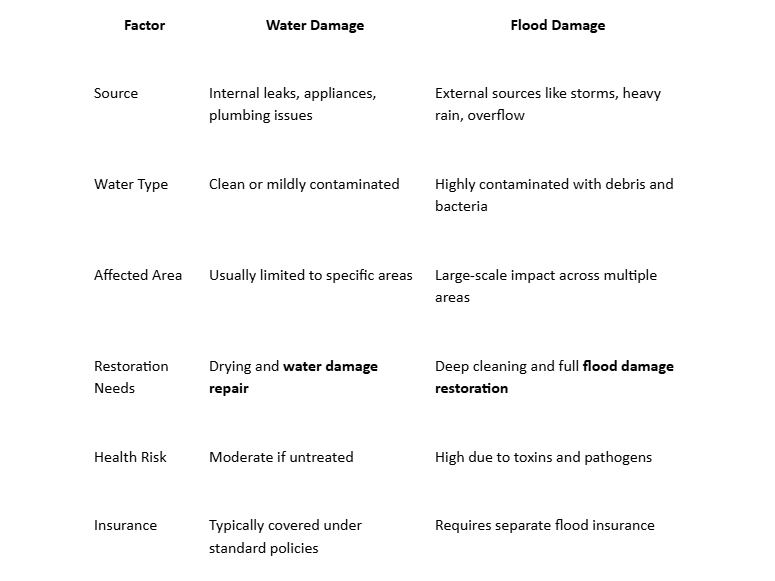
Such differences emphasize the importance of determining the nature of the damage prior to initiating any restoration process. The inadequate approach would result in faulty repairs and repeaters.
Early Warning Signs You Should Never Ignore
Detecting damage indicators early in the process can help address the situation before it becomes critical. Your home will tend to show warning signs, whether it's water damage or flooding.
There is always a damp or stuffy odor.
Water marks or discolouration on ceilings and walls.
Warped or swollen flooring
Painting peeling off or sponging.
Development of molds in corners or concealed areas.
These symptoms can be evidence of concealed dampness or even emerging home flood damage. By neglecting them, it is possible to cause greater damage and increase repair costs. Early intervention also ensures that the problem is kept within bounds and solved.
Why Quick Response and Professional Help Matter
Time is a key factor in determining water damage vs flood damage. It can take minutes and hours to have water start destroying material and weakening structures, respectively. Things are no better, as mould growth may start within 24 to 48 hours.
It is possible to repair water damage on the spot and address minor issues before they escalate into serious structural problems. The direct reaction to the flooding conditions is to employ professional flood cleanup services to eliminate the polluted water and create a safe environment in which to live.
It is supported by modern tools and mechanisms, including moisture detectors, industrial dryers, and dehumidifiers, to help the professional restoration team deliver a complete drying and cleaning process. Sanitization, odor removal, and structural repairs are also included in flood damage restoration in severe cases.
By choosing the specialists, one is sure that apparent and latent damages are taken into account. Not only does this fix your house, but it also leaves future problems at bay, thus saving you time and money in the long run.
Conclusion: Make the Right Move When It Matters Most
Learning about water damage vs. flood damage is not merely a matter of knowledge, but a necessary step to save your house and your family. Although both of these damages may ruin the place you live in, they are caused, risky, and restored differently.
Early detection of the problem, prompt response, and the selection of an appropriate restoration method can help the homeowner reduce damage and recover more quickly. Even with a minor leak or extensive damage to furniture caused by floods, acting quickly is most important to avoid the prolonged effects of the situation.
Restore Me TX believes in assisting homeowners in building confidence in restoring their spaces. The team guarantees restoration of every home to safe, clean, and comfortable conditions following any damage caused by water with advanced restoration methods, fast response, and a customer-centric philosophy.
